
Industrial Gas Analysis Systems
We engineer the whole measurement chain: the extraction point, the sample conditioning that keeps the analyzer working, the cabinet it is built into, and the interface that delivers the result to your control system.
The measurement chain
Reliable gas analysis depends on the complete measurement chain: representative sampling, suitable sample conditioning, the analyzer, and integration with the plant control system. These stages are engineered together for the application.
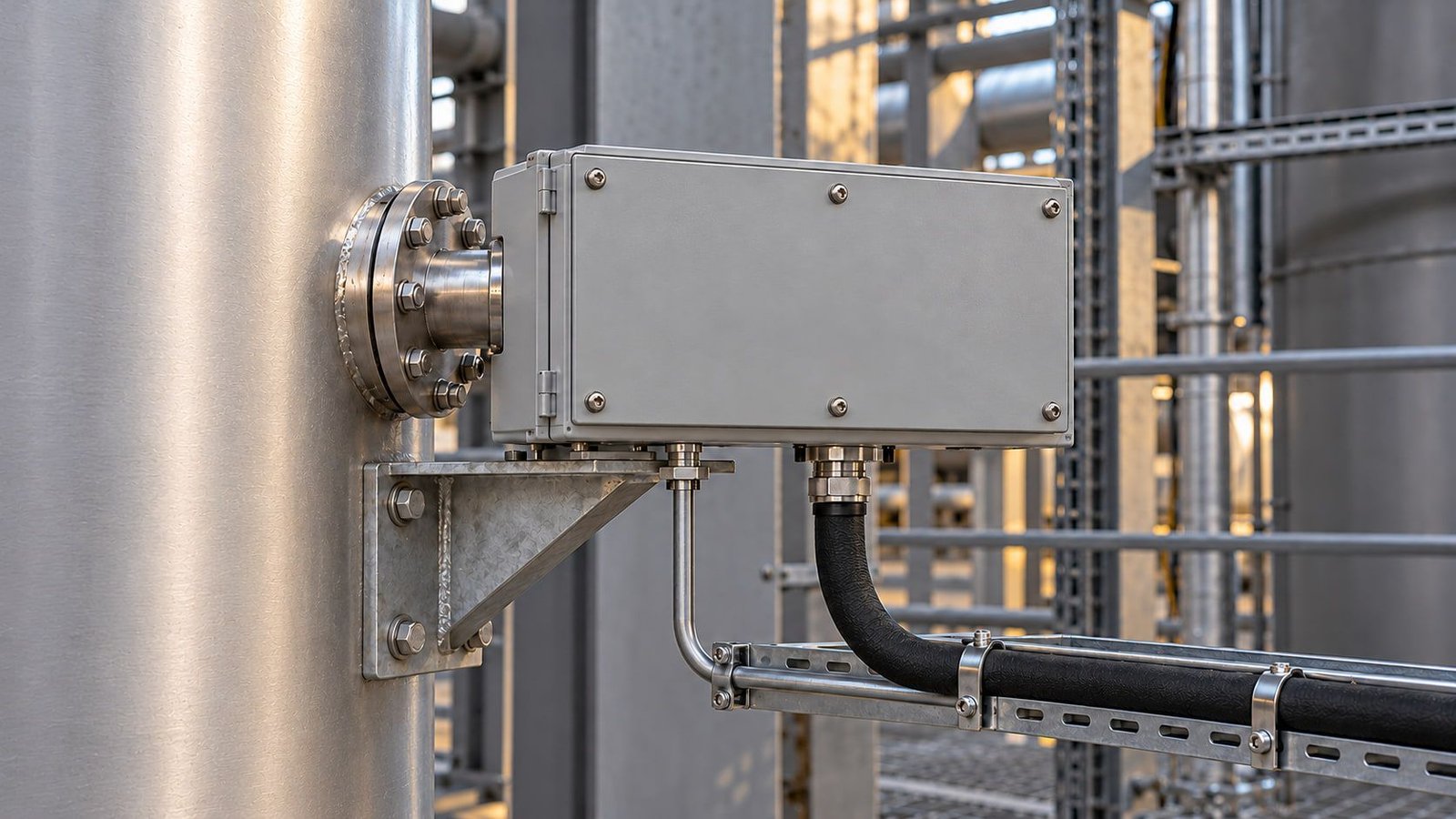
01Sample Extraction
A sampling probe takes gas from a selected process location and transfers it to the analysis system. Where the probe sits, and how it is supported, decides whether the sample represents the process at all.
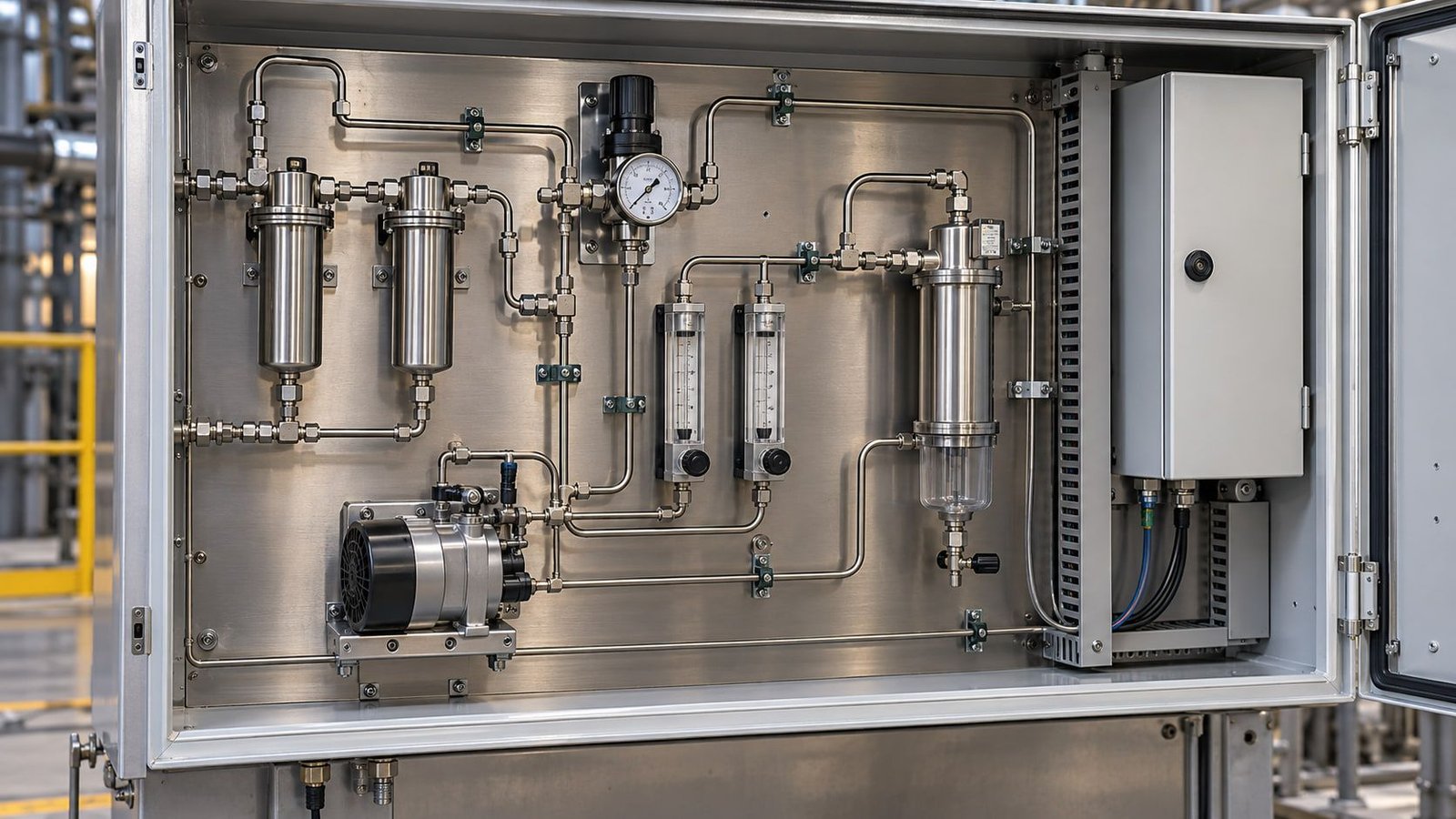
02Sample Conditioning
The sample is prepared to suit the analyzer while preserving the gas components being measured. Most of the engineering risk sits here: a sample that arrives too hot, too wet, too dirty or too slow produces a number that looks plausible and is wrong.
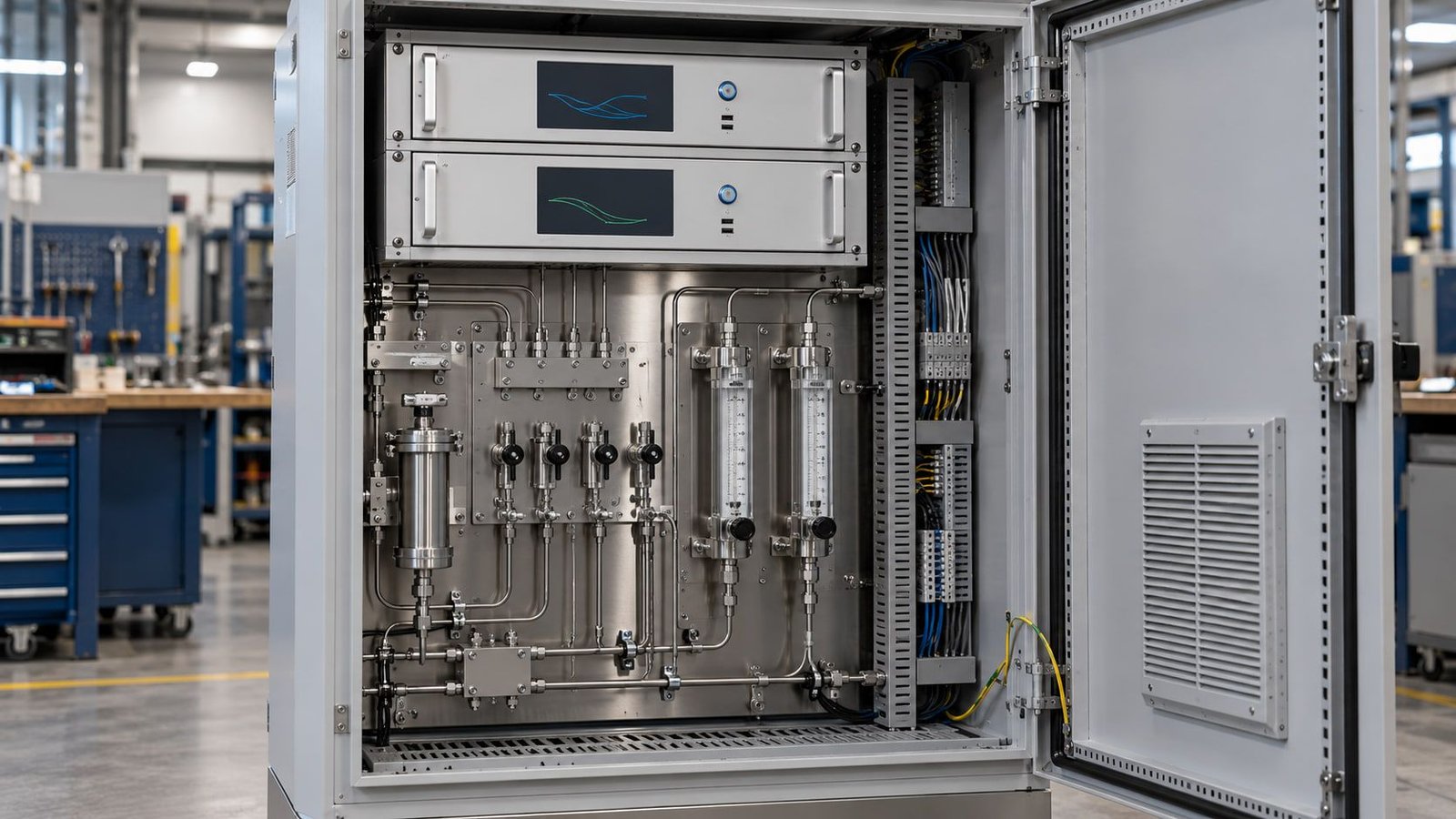
03Gas Analysis
The analyzer measures the selected gas components and provides measurement and diagnostic outputs. The measurement principle and the instrument are chosen against the stream composition, the expected range, the response time the process needs, and the environment the instrument will live in.
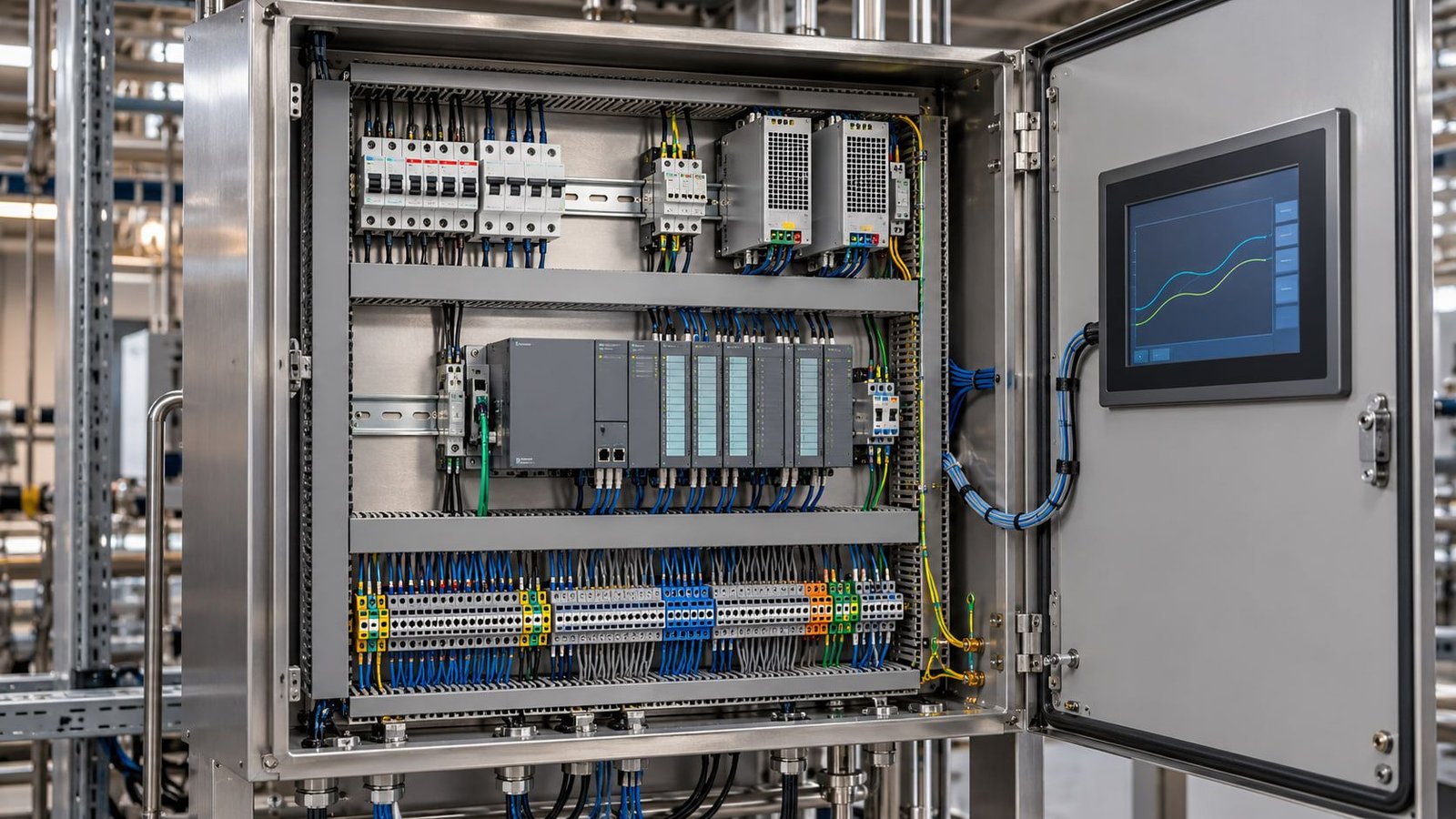
04Control Integration
Measurements and the available status signals are connected to the plant control system for display, alarms and process integration, together with the fault and validation information it needs in order to treat a measurement as trustworthy.
Analyzer supply and selection support
We help define what actually needs to be measured, then select instruments against that definition. Where an analyzer has already been chosen, we review whether the installation around it will let it perform as specified.
Analyzers can be supplied as part of a system or quoted separately. Model availability, lead times and manufacturer specifications are confirmed with the source before they are quoted.
- Definition of the measurement task and acceptance criteria
- Instrument selection against process conditions and installation constraints
- Review of an existing analyzer specification before purchase
- Calibration gas and validation arrangement planning
Sample extraction and sample conditioning systems
A conditioning system has one job: deliver a sample to the analyzer that still represents the process, at a temperature, pressure, flow and cleanliness the instrument can handle. Everything else follows from the stream itself.
We design extraction probes and their enclosures, filtration stages, heated or unheated transport, cooling and condensate removal, pressure and flow regulation, and the switching needed for calibration and validation.
- Sampling probes, probe enclosures and extraction assemblies
- Staged filtration sized for the actual particulate load
- Heated sample transport, cooling and condensate removal
- Pressure reduction, flow regulation and bypass arrangements
- Calibration, validation and purge switching
Analyzer cabinets and integrated analytical systems
Cabinets are built as maintainable assemblies. Component placement, tubing routing, valve accessibility and wiring separation are design decisions, and they decide how long the system stays in service.
Our team has delivered analyzer shelters for stack-side installation, continuous emission monitoring assemblies, and sampling systems with probe enclosures. Scope for each project — build location, testing and acceptance — is agreed in the contract.
- Single-analyzer and multi-analyzer cabinets
- Analyzer shelters and enclosures for outdoor installation
- Continuous emission monitoring system assemblies
- Utility, purge and safety provisions within the enclosure
- Factory assembly, wiring, tubing and functional testing
Integration with PLC and plant control systems
A measurement is only useful once the control system can act on it. We define and implement the interface: signal types and ranges, communication links, alarm and fault handling, and the validation status that tells operators whether the value can be trusted right now.
Where data acquisition and reporting are part of the scope, the acquisition and handling cabinet is engineered together with the analytical system rather than bolted on afterwards.
- Analog and digital signal interfaces to PLC and DCS systems
- Communication protocol links where supported by the instruments
- Alarm, fault and maintenance-mode signalling
- Data acquisition and handling control cabinets
- Interlock and safety function interfaces, to the scope agreed
Engineering documentation
The documentation set is part of the deliverable, not a formality. Electrical schematics, cabinet layouts, tubing and instrument diagrams and the mechanical design are produced in AutoCAD, EPLAN Electric P8, EPLAN Pro Panel and PTC Creo Parametric.
The documents your site actually needs — and the format they are delivered in — are agreed at the start of the project.
- Electrical schematics and cabinet wiring documentation
- Panel layout and mechanical design
- Sampling and tubing diagrams
- Bills of materials and component lists
- As-built documentation on handover
What this is — and what it is not
This page is about industrial process gas analysis: continuous measurement of gas composition inside or downstream of a process, for control, optimization and emission monitoring.
It is not general-purpose gas leak detection. Area gas detection and safety monitoring are a different discipline with different standards and products, and we do not offer them here. If leak detection is what you need, tell us — we will say plainly whether we can help.
Describe your measurement task
The more we know about the stream and the installation, the more useful our first reply will be. Process conditions, gases of interest and the scope you want from us are the three things that matter most.