Applications

Industries We Engineer For

Six process environments, each of which changes the engineering in a specific way. The analyzer may be the same; the sampling, the enclosure and the maintenance plan are not.

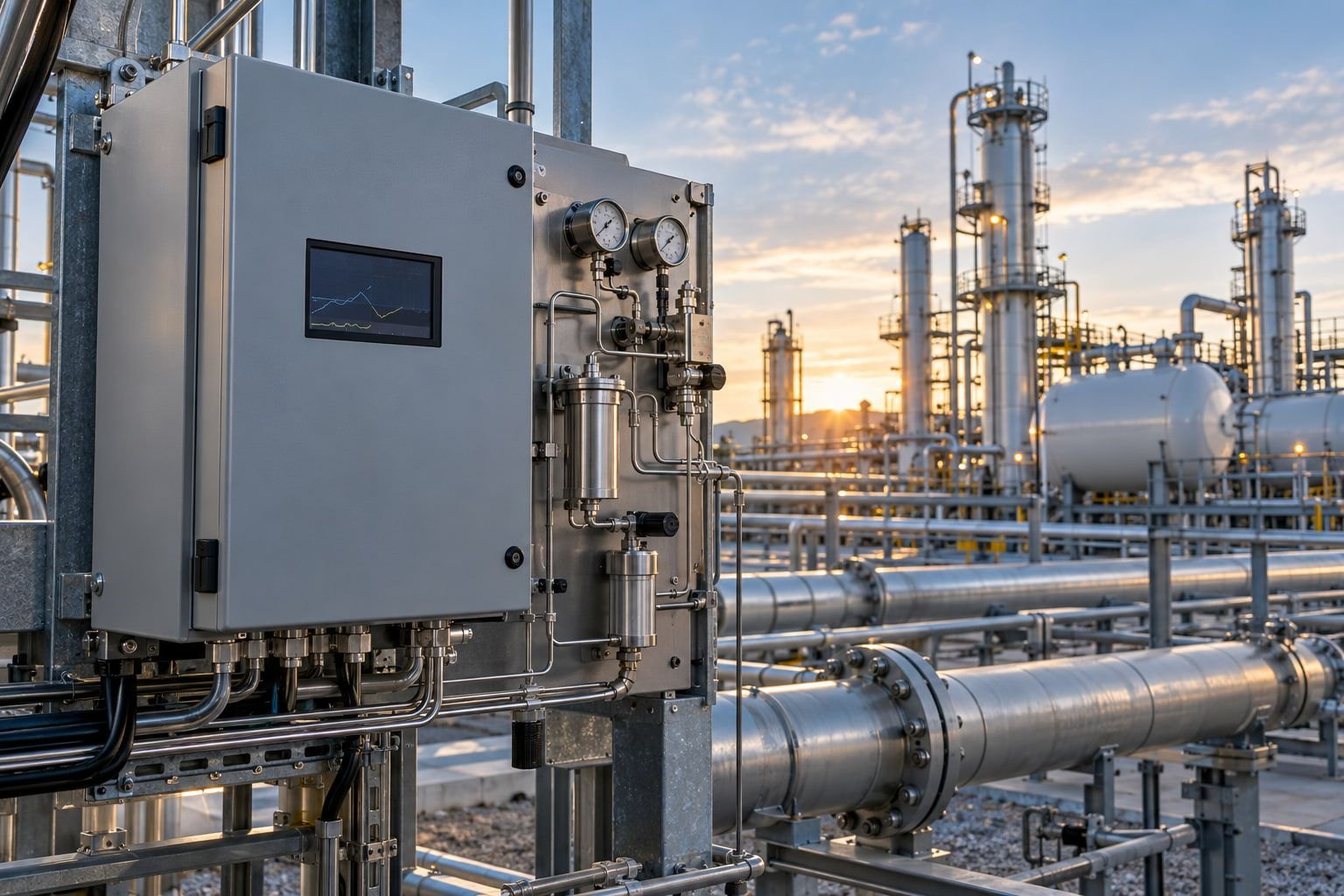
Illustration of an analyzer cabinet and sample conditioning panel mounted beside large insulated process pipelines, with gas treatment columns behind.

Oil & Gas

Process and emissions measurement on gas treatment, separation and flare systems, where sample lines see condensate, heavy hydrocarbons and wide pressure swings.

Upstream and midstream installations rarely fail at the analyzer — they fail at the sample. Liquid carryover, condensation in unheated lines and pressure that drops across a long tubing run all change the reading before it reaches the instrument. We design the extraction point, conditioning and enclosure as one assembly, specify instruments against the actual stream rather than a catalogue entry, and define how the result reaches your control system.

Typical tasks

  • Sample extraction from pressurized process lines
  • Heated sample lines and condensate removal
  • Enclosures and shelters for outdoor and remote locations
  • Signal integration with existing PLC or DCS systems
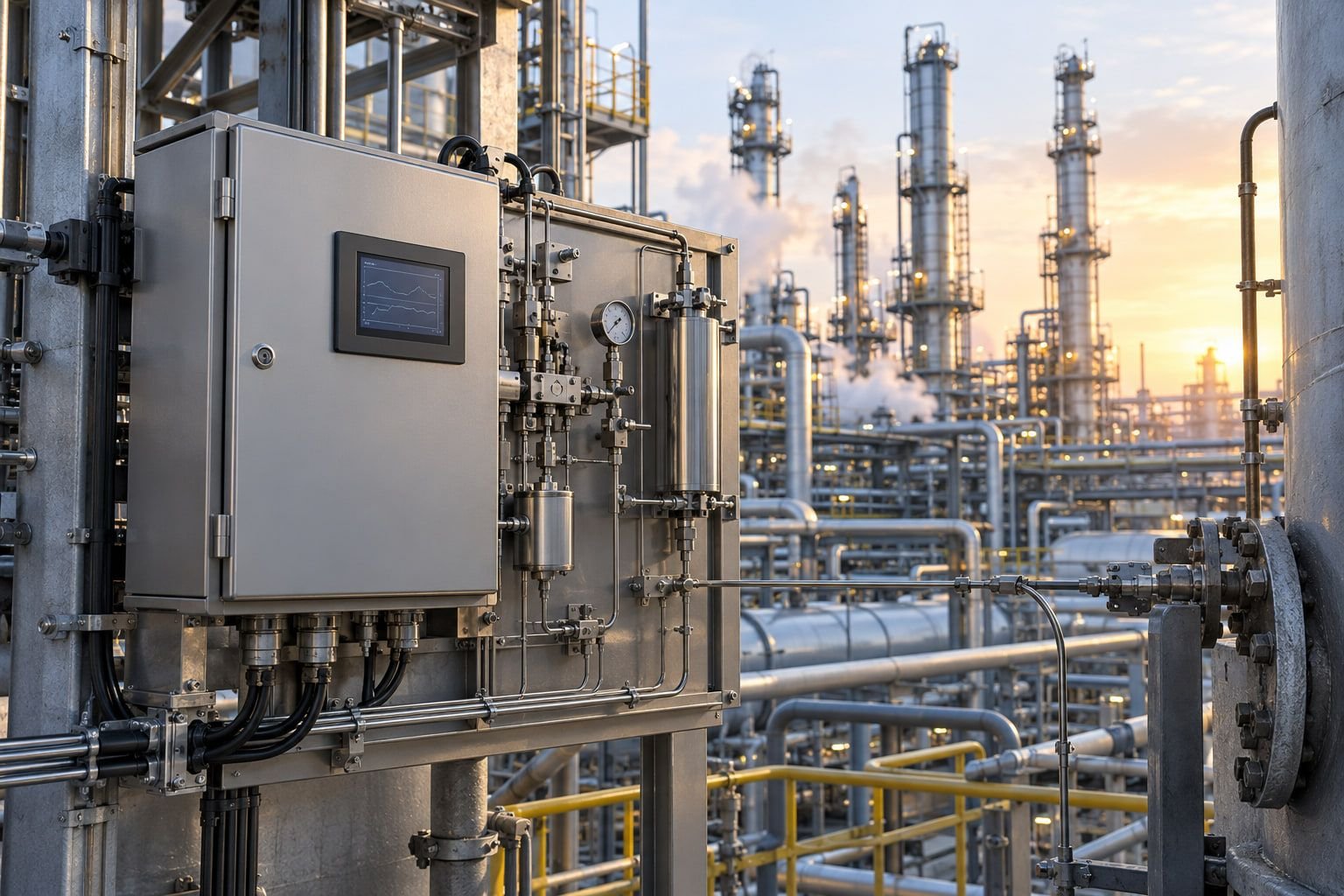
Illustration of an analyzer cabinet with a sample conditioning panel on a vessel, among petrochemical columns and dense process piping.

Chemical & Petrochemical

Reactor, column and furnace measurement where the sample is corrosive, hot or carries particulate, and where analyzer availability drives process stability.

Chemical plants ask an analyzer to survive conditions the process itself is designed to contain. Material selection along the whole sample path, filtration staged so one element is not doing every job, and calibration access that does not require a unit shutdown all matter more than the headline specification of the instrument. We build analytical cabinets as maintainable assemblies, with documented tubing, valve and wiring layouts.

Typical tasks

  • Multi-stage filtration and corrosive-service materials
  • Analyzer cabinets with calibration and validation lines
  • Integration of several analyzers into one system
  • Control interfaces for process and safety functions
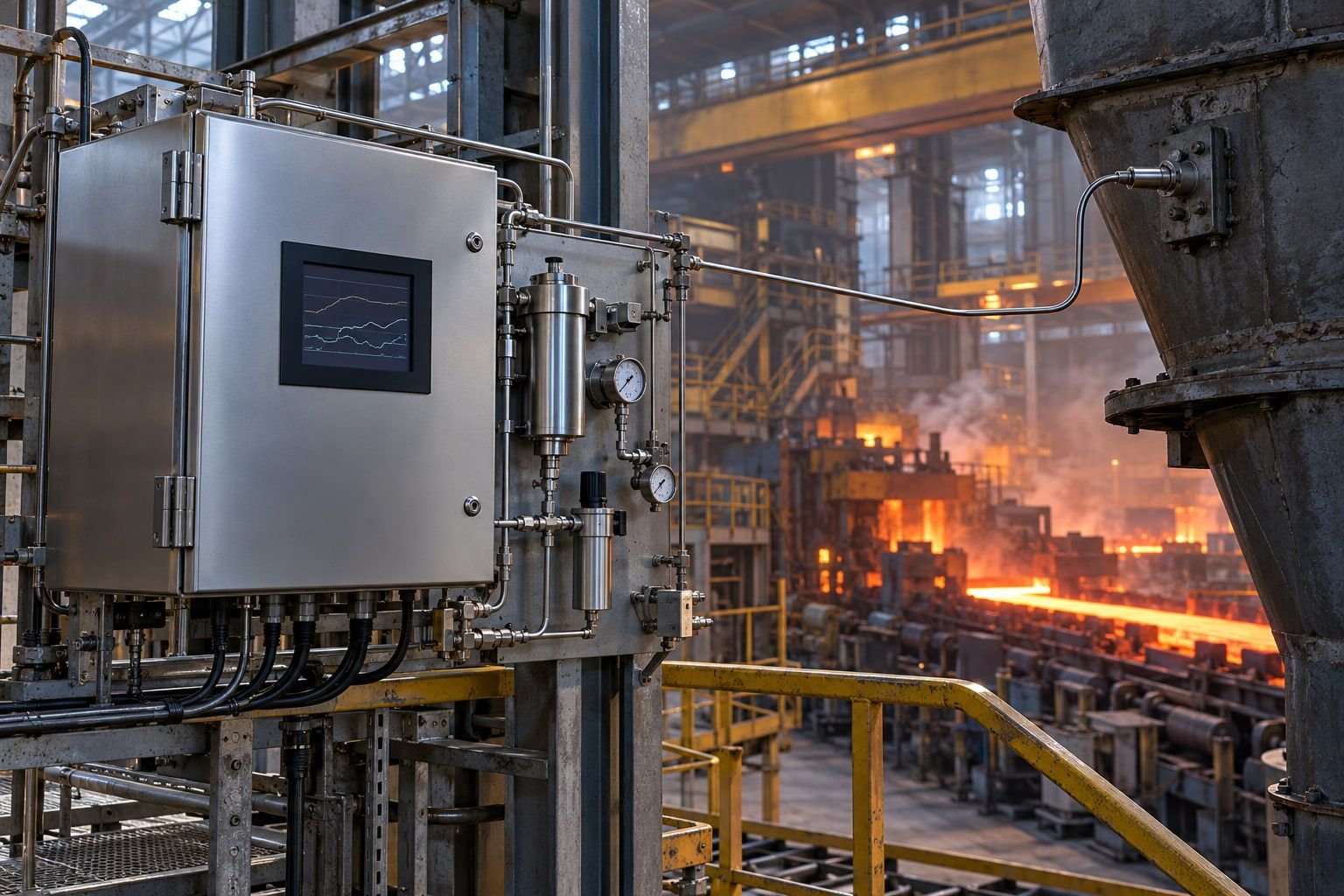
Illustration of an analyzer cabinet with sample filters and gauges in a steel mill, with a hot rolling line and an extraction hood behind.

Metals & Steel

Furnace, converter and reheat applications with high temperature, dust loading and process gases that must be measured continuously to control combustion.

Dust is the defining problem. A probe that works for a week and blocks in the second one is not a measurement system. We specify probe construction, back-purge arrangements and filtration for the real dust load, and design the enclosure so maintenance can be done in the time the plant will actually give them. Combustion control and process gas monitoring are then interfaced to the existing control platform.

Typical tasks

  • High-temperature and high-dust sampling probes
  • Back-purge and probe protection arrangements
  • Combustion-related process gas measurement
  • Cabinet integration in hot and dirty plant areas
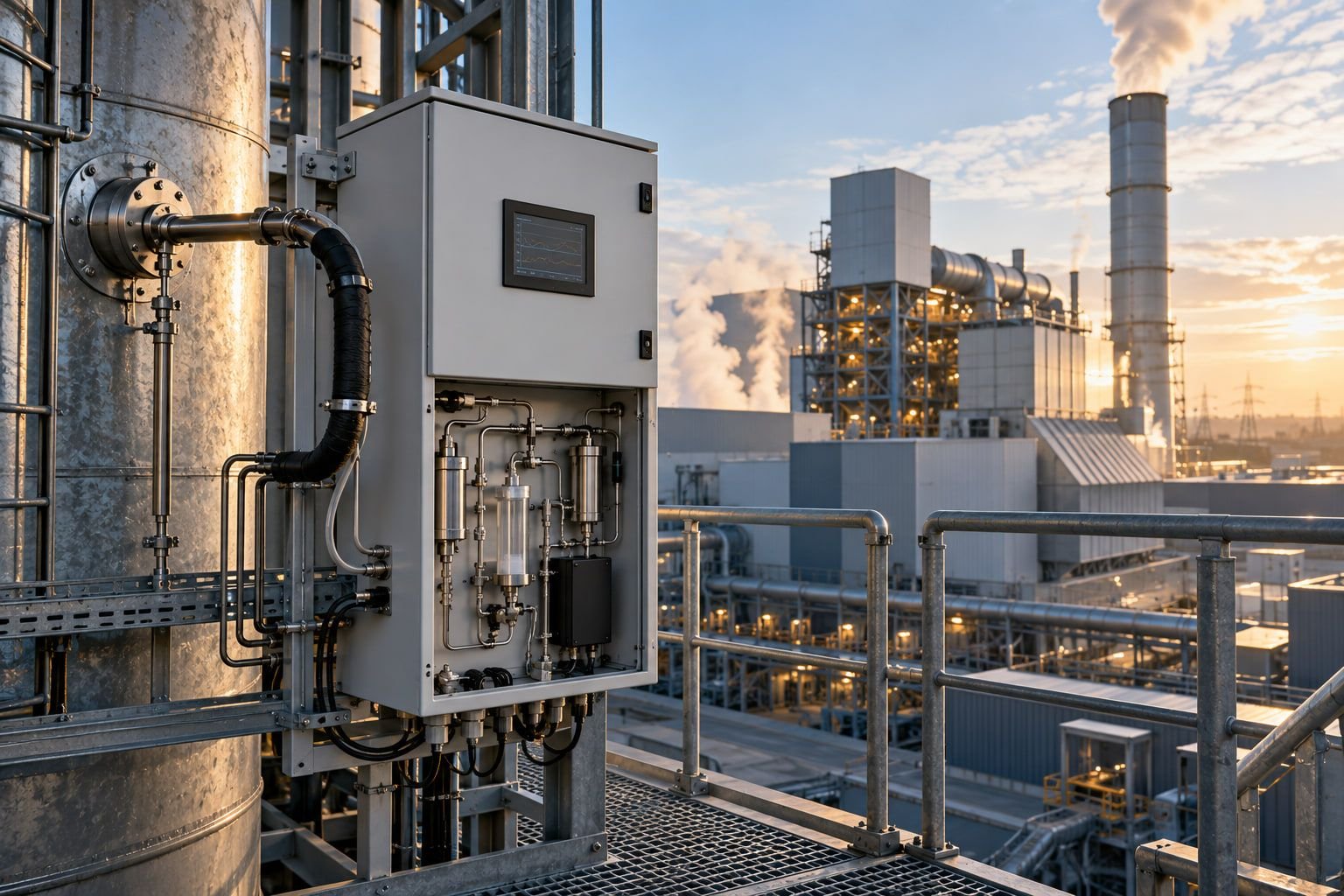
Illustration of an analyzer cabinet and sample conditioning panel on a stack duct at a power plant, with steam plumes and stacks behind.

Power Generation

Combustion and stack monitoring, including continuous emission monitoring system installations, data acquisition cabinets and reporting interfaces.

Power plant monitoring couples the measurement to the data it produces. A continuous emission monitoring system is only useful if the values are acquired, time-stamped and handed to the plant systems in a form that reporting can rely on. We engineer the analytical side — shelter, sampling, conditioning, analyzer layout — together with the data acquisition and handling cabinet and its control interfaces.

Typical tasks

  • Analyzer shelters for stack-side installation
  • Continuous emission monitoring system assemblies
  • Data acquisition and handling control cabinets
  • Hydrogen and oxygen monitoring around generators and auxiliaries
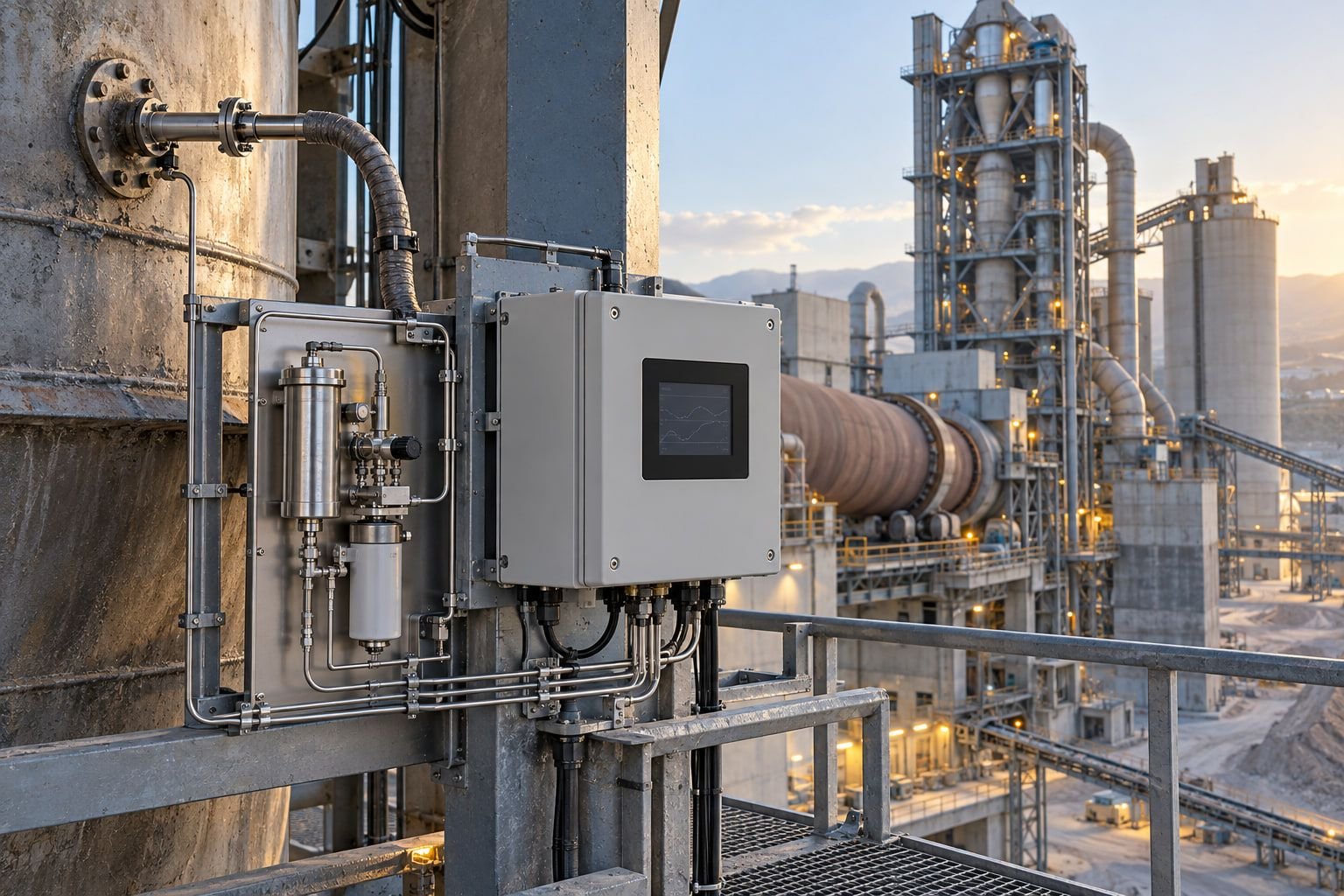
Illustration of a sample conditioning panel and analyzer cabinet mounted on a silo, with a rotary kiln and preheater tower behind.

Cement & Lime

Kiln inlet, preheater and stack measurement, where sampling has to cope with extreme dust and sticky deposits while still delivering a usable signal.

Kiln gas analysis is one of the hardest sampling problems in industry: high temperature, alkali-rich dust and deposits that form in hours rather than weeks. The engineering work is in the probe and conditioning design and in making routine cleaning a planned operation instead of an emergency. We design the sampling assembly, the conditioning system and the interface that lets kiln control use the measurement.

Typical tasks

  • Kiln inlet and preheater sampling assemblies
  • Heavy-duty filtration and automatic cleaning provisions
  • Conditioning systems for high-dust, high-moisture gas
  • Control interfaces for kiln and process optimization
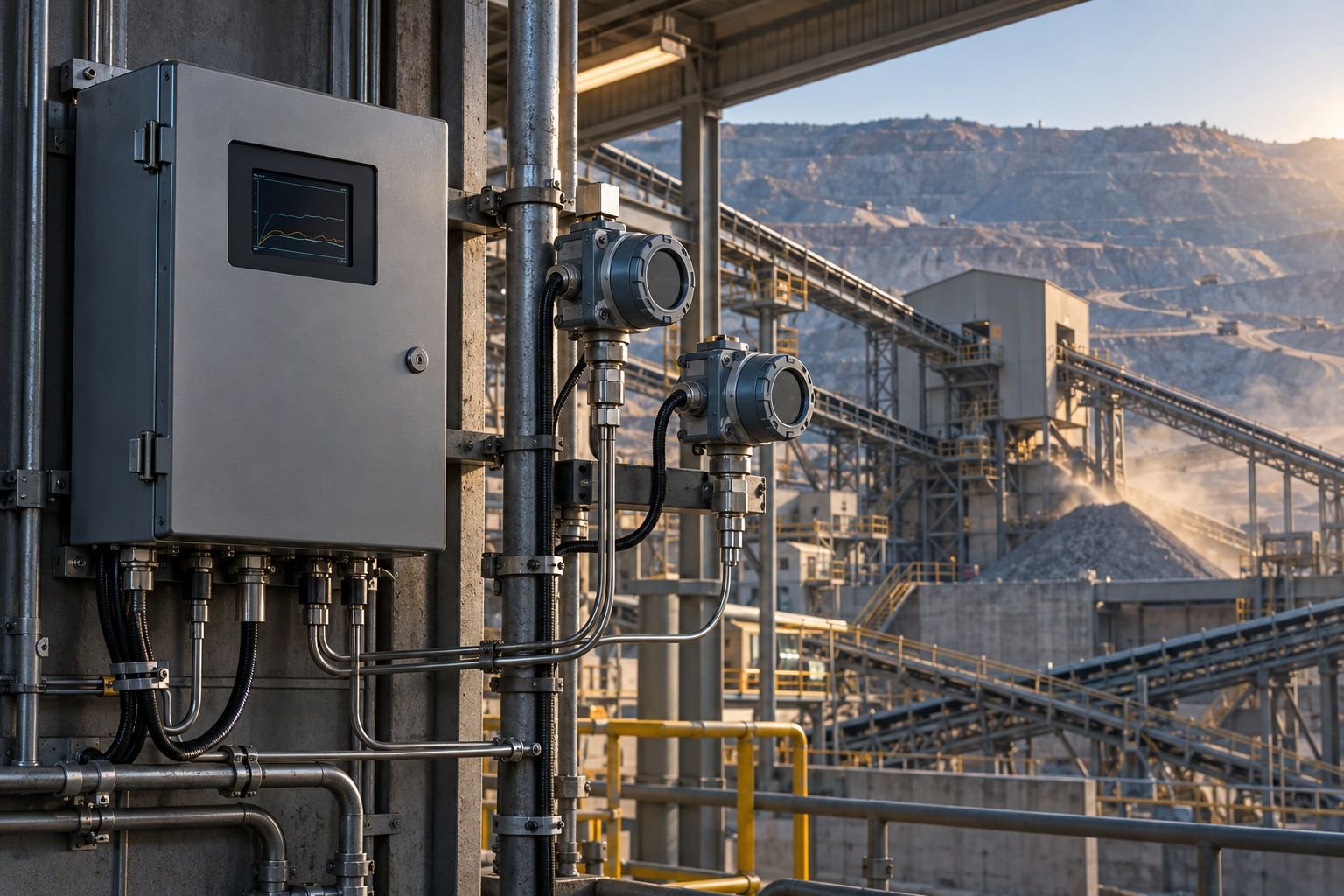
Illustration of a monitoring enclosure and two gas detectors on pipework at an open-pit mine, with conveyors and a stockpile behind.

Mining & Mineral Processing

Measurement and control for roasters, dryers, smelters and materials handling, often at remote sites with limited local engineering support.

Remote sites change the design brief. Spare-part commonality, enclosures that tolerate dust and temperature swings, and documentation complete enough that site staff can work without the designer on the phone all become part of the specification. We engineer control cabinets and analytical systems for this context and deliver the electrical and mechanical documentation with them.

Typical tasks

  • Process gas measurement on roasters and dryers
  • PLC control cabinets for processing equipment
  • Instrumentation integration across process areas
  • Documentation packages for site maintenance teams

What these applications have in common

In every one of them, the failure mode is the same: a measurement or control system that works at the factory acceptance test and degrades in service, because the design assumed a cleaner, cooler, more stable process than the one it was installed in.

That is why our first question is never which analyzer you want. It is what the stream actually does — at startup, at full load, during an upset, and on the day the maintenance window is shorter than planned.

Tell us about your process

Describe the industry, the application and the measurement or control task. If it falls outside what we engineer, we will say so directly.